View by Topic
View by Type
View by Day
Welcome Reception
Keynote: Flying Through Fear: Creating a Culture of Courage
Get ready for an unforgettable experience with Michelle "MACE" Curran, former fighter pilot and Lead Solo Pilot for the Air Force Thunderbirds!
Through stunning visuals, high-energy storytelling and powerful lessons from the cockpit, MACE will share her remarkable journey from battling self-doubt and imposter syndrome to performing some of the most demanding maneuvers in aviation.
Discover how embracing vulnerability, stepping beyond comfort zones and taking courageous action can unlock new levels of performance and growth.
You will be challenged to shift your perspective, build confidence, and pursue bold goals with greater resilience. Whether you are leading teams, navigating change, or striving for personal excellence, MACE’s story will leave you energized, empowered and ready to take flight beyond what you thought was possible.
Presenter: Michelle "MACE" Curran
Topic(s): *Professional Development Emotional Intelligence
Type(s): Keynotes & Panels Stage

Michelle “MACE” Curran is a highly sought-after international speaker, former fighter pilot and USA Today bestselling author known for dynamic storytelling and expertise in overcoming fear and self-doubt. During 13 years in the US Air Force, she made history as only the second woman to fly as Lead Solo Pilot for the Thunderbirds, performing for hundreds of millions worldwide.
MACE has inspired teams at Microsoft, Boeing, John Deere, SpaceX, Purina, PwC and more, helping them move from hesitation to decisive action. Her insights have been featured on The Kelly Clarkson Show, CBS Mornings, Glamour and other major media outlets. Her newest book, The Flipside: How to Invert Your Perspective and Turn Fear Into Your Superpower, debuted in the top 20 on the USA Today Bestseller list. She also reaches millions each month as a LinkedIn Top Voice.
Expo Charge Up
Beyond the Idea: Navigating the Journey from Challenge to Market-Disrupting Product
Presenter: Dr. Soloman Almadi
Topic(s): *Artificial Intelligence (AI) *Instrumentation & Process Control *Case Studies on New Technologies *Critical Infrastructure Protection Industrial Control Systems (ICS) Soft Sensors & Advanced Process Analytics Robotics & Autonomous Operations ISA/IEC 62443 Implementation Data Connectivity Standards & Regulations
Type(s): Emerging Technologies & Process Control Stage


Dr. Soloman Almadi is a Principal Scientist in process control, automation systems, networking, cybersecurity and digital transformation at Saudi Aramco. He holds a Ph.D. in Real-Time Systems Simulation and Computing from Brunel University (UK), a Master’s degree in Electrical Engineering from Southern Methodist University and a Bachelor of Science in Electrical Engineering from the University of Texas (USA). A prolific inventor, Dr. Almadi holds over 30 patents and has published more than 50 technical papers. His contributions to the field have been recognized with numerous prestigious awards, including the 2018 Custodian of the Two Holy Mosques King Salman Award for Inventors, the International Society of Automation (ISA) Inventor of the Year award (2021) and the UK Alumni of the Year award (2022). In recognition of his international contributions to both industry and academia, he holds the distinguished status of ISA Fellow (2024).
Dr. Almadi is deeply committed to community outreach and leadership development. He has played a key role in leading Toastmasters programs where he received the Excellence in Leadership award from Toastmasters International, the Tomooh soft skills program and the Saudi BICSI chapter. Additionally, he serves as a member in the ISA International Executive Board, ISA Saudi Arabia Local Section Board and Saudi BICSI Board. He also serves as an Adjunct Professor at King Fahd University of Petroleum and Minerals (KFUPM).
Fireside Chat: Leading Through the Unexpected: Crisis Management as a Career Skill in Automation
Crisis management isn't just an operational necessity. It's one of the most valuable career skills an automation professional can develop, and it's built long before a crisis arrives.
In this fireside chat, former USAF Thunderbird pilot Michelle "MACE" Curran unpacks what actually happens in the seconds after something goes wrong. She'll walk through the framework fighter pilots use when the unexpected hits at 300 miles an hour, explain why multitasking is a myth and relentless prioritization is the real skill and show how to set a bad moment aside so it doesn't contaminate your next decision.
This conversation will cover the difference between reacting and responding, how preparation turns instinct into something you can trust and why the debrief matters more than the drama. Michelle will also share what fear looks like at the highest levels of performance and the moment a leader's belief in her changed the direction of her career.
Bring your questions. The second half of the session is open to the audience.
Presenters:
Topic(s): Emotional Intelligence Change Management *Professional Development
Type(s): Career Skills Stage

Dr. Brian Romano, Ph.D., is vice president of engineering and technology at The Arthur G. Russell Company, with a career spanning more than 40 years in industrial automation. He directs AGR’s strategy for integrating advanced control platforms, IIoT sensors and Industry 4.0 principles into automated assembly systems. Previously, he founded and led a successful systems-integration firm that connected factory-floor automation with enterprise IT systems.
An active ISA contributor, Dr. Romano serves on the Smart Manufacturing TAC and the ISA Automation Summit Content Committee. His contributions to the field earned him the 2022 ISA SM/IIoT Division Leader of the Year award and selection as a 2025 ISA Fellow. He holds a Ph.D. in Technology and Innovation, an MBA in Data Analytics and degrees in information systems and computer science. Committed to workforce development, he teaches automation and control systems at the University of Hartford and Central Connecticut State University and is a pilot and retired major in the US Air Force Auxiliary (The Civil Air Patrol).
Michelle “MACE” Curran is a highly sought-after international speaker, former fighter pilot and USA Today bestselling author known for dynamic storytelling and expertise in overcoming fear and self-doubt. During 13 years in the US Air Force, she made history as only the second woman to fly as Lead Solo Pilot for the Thunderbirds, performing for hundreds of millions worldwide.
MACE has inspired teams at Microsoft, Boeing, John Deere, SpaceX, Purina, PwC and more, helping them move from hesitation to decisive action. Her insights have been featured on The Kelly Clarkson Show, CBS Mornings, Glamour and other major media outlets. Her newest book, The Flipside: How to Invert Your Perspective and Turn Fear Into Your Superpower, debuted in the top 20 on the USA Today Bestseller list. She also reaches millions each month as a LinkedIn Top Voice.
Panel: Cybersecurity in US Water Systems: Lessons from the Recent Incidents
Recent cyberattacks on municipal water systems have exposed the persistent vulnerability of America's roughly 144,000 public water systems, most of which are small community utilities with limited staff, modest budgets, and minimal cybersecurity expertise.
This session examines practical, risk-focused methods for securing operational technology in the water sector. We will explore how frameworks such as ISA/IEC 62443 and programs like the NRWA Cybersecurity Circuit Rider help utilities of all sizes prioritize meaningful risk reduction rather than merely checking compliance boxes.
Panelists will share lessons from recent incidents, highlight the collaborative efforts of organizations such as NRWA, WaterISAC, EPA, CISA and the FBI to bolster utility resilience, and explain why industry-led, consequence-based strategies may be more effective than generic regulatory approaches in safeguarding the country's critical water infrastructure.
Presenters:
Topic(s): *OT Cybersecurity ISA/IEC 62443 Implementation Standards & Regulations *Critical Infrastructure Protection
Type(s): Keynotes & Panels Stage

 Marco has 30 years of field experience, during which time he designed, implemented and maintained process instrumentation, automation systems, safety systems and process control networks. In his role with a large global manufacturing company, he is responsible for applications globally that are specific to plant site operations and corporate governance.
With nearly 2 decades focused specifically on industrial cybersecurity, he led efforts to secure the oil and gas (all streams), maritime port, offshore facilities and chemical sectors supporting federal, local and state entities in securing the private sector.
Marco is highly active in the International Society of Automation (ISA) as a longtime member and has recently been elected to the ISA Executive Board. He is a 22-year Senior Member and a certified cyber instructor for ISA/IEC 62443 with volunteering commitments and contributor to the AMSC Gulf of America (Mexico) cybersecurity committee in a sworn-in role to the US Coast Guard (USCG) as chair of threat intelligence and cybersecurity for the outer continental shelf (OCS).
He has been an InfraGard member since 2014 and is currently serving as president of the Houston Members Alliance.
 Steve Mustard, PE, CAP, GICSP, CMCP, has over 35 years of experience in the automation industry. He has developed embedded software and hardware for military applications and created products for industrial automation and control systems. Currently, much of his work focuses on assessing the cybersecurity readiness of organizations in critical infrastructure.
In addition to being the former 2021 ISA President, Mustard holds multiple certifications and professional engineering licenses. These include being a licensed Professional Engineer (PE), an ISA Certified Automation Professional (CAP), a UK-registered Chartered Engineer (CEng), a Fellow of the Institution of Engineering & Technology, a European-registered Engineer (EUR Ing), a Global Industrial Cyber Security Professional (GICSP) and a Certified Mission Critical Professional (CMCP).

Graham Nasby, P.Eng., PMP, CAP, CISSP, GICSP, is the systems lead for Eastern Canada at PBX Engineering, a specialty engineering firm focused on electrical engineering, system integration and supervisory control and data acquisition (SCADA) master planning services across multiple critical industries. He is responsible for developing and executing PBX's municipal utilities business in Ontario and Eastern Canada.
Graham has more than 25 years of experience, including 4 years as senior manager of OT & Network Security Architecture for CN Rail and 7 years managing SCADA systems at Guelph Water.
Graham holds both Ontario water and wastewater operator licenses, is an active member of the American Water Works Association (AWWA) and is the founding co-chair of the ISA112 SCADA systems management standards committee.

Dr. John DeGour currently serves as the National Rural Water Association's (NRWA) Director of Regulatory Affairs, overseeing NRWA's regulatory and cybersecurity initiatives. He brings over 25 years of experience and expertise in water, public health and government affairs to NRWA. John has managed, developed and implemented drinking water policies and programs for federal and state primacy agencies. He previously held positions at the Environmental Protection Agency, the State of Delaware’s Office of Drinking Water, the New Jersey Department of Agriculture and the New Jersey Department of Health. Additionally, John is a United States Army Veteran. Dr. DeGour holds a Doctor of Public Health, a Master of Public Health and a Bachelor of Environmental Sciences degree.
AI in Cybersecurity
Artificial Intelligence (AI) is rapidly transforming the cybersecurity landscape, creating unprecedented opportunities for defenders and significant advantages for threat actors. As organizations accelerate the adoption of AI-driven technologies, cybersecurity operations are evolving from predominantly human-centric processes to machine-assisted and machine-enhanced decision-making. This transformation is especially significant in operational technology (OT) environments, where cybersecurity decisions can directly affect physical systems, industrial processes, safety, reliability and business continuity.
This session explores the evolving role of AI in cybersecurity, examines emerging risks associated with AI adoption and discusses the implications for OT cybersecurity, governance and future industry standards.
Presenter: Dennis Hackney
Topic(s): *Artificial Intelligence (AI) *OT Cybersecurity *Critical Infrastructure Protection Industrial Control Systems (ICS) Cyber-Physical Security
Type(s): ISAGCA OT Cybersecurity Stage

Dennis Hackney is a cybersecurity leader with 25 years of experience specializing in operational technology (OT) security for the energy sector. He designs and deploys advanced cybersecurity solutions for industrial environments and supports industry compliance efforts as an adjunct professor at Texas A&M School of Law. He holds a PhD in information security, along with degrees in electronic systems applied sciences and business administration.
From Pilot to Scale: Selling Emerging Tech Inside Asset-Intensive Organizations
Emerging technologies often demonstrate their value in a single pilot or proof of concept, but turning that early win into organization-wide adoption is where most initiatives stall. This session explores the unique challenges of championing new technology in asset-intensive industries, where legacy systems, risk-averse cultures and long capital cycles can slow innovation.
Drawing on real-world experience, we will share practical strategies for building internal buy-in, communicating value to non-technical stakeholders and navigating organizational resistance to change. Attendees will leave with actionable insights to move emerging technology initiatives from isolated experiments to scaled, sustained adoption across their organizations.
Presenter: Chris Monchinski
Topic(s): Standards & Regulations *Case Studies on New Technologies Change Management Soft Sensors & Advanced Process Analytics Robotics & Autonomous Operations Emotional Intelligence Industrial Data Architecture Stakeholder Engagement Workplace Effectiveness Data Connectivity Skills Gap Communication & Influence
Type(s): Emerging Technologies & Process Control Stage

He thrives on tackling complex challenges, offering thought leadership, strategic insight and hands-on guidance in digital transformation (DT) and data analytics (DA). Early in his career, he and his colleagues coined the term "tweeners" for their unique position bridging information technology (IT) and operational technology (OT). Back then, IT and OT were siloed, but they successfully bridged that gap – an endeavor that remains a cornerstone of his work as IT/OT convergence becomes mainstream. He is passionate about leveraging data from all corners of an organization, turning it into actionable insights that drive excellence.
Chris’ commitment to the industry extends beyond the boardroom. He actively contributes to key organizations, serving as a member of the Smart Manufacturing Model Committee at Manufacturing Enterprise Solutions Associations (MESA) and chairing both the MESA Analytics Working Group and Knowledge Committee. His leadership roles include former vice president of the International Society of Automation (ISA) Standards and Practices Board (2019-2020), managing director of the ISA Standards and Practices Board and Chair of the ISA95 committee on enterprise-to-control system integration. As the convenor of the International Electrotechnical Commission (IEC)/International Organization for Standardization (ISO) Joint Working Group 5 (JWG5), he oversees the maintenance of the IEC-62264 standards series.
He is a frequent speaker at industry events, sharing insights at conferences hosted by MESA, ISA and International Society for Pharmaceutical Engineering (ISPE). Collaborating with fellow experts to advance our industry fuels his passion for innovation and knowledge sharing.
How to Excel at Work Without Sacrificing Well-Being
In today’s fast-paced work environment, many professionals feel pressured to go above and beyond to stand out, secure new opportunities and build a strong reputation. But sustained high performance should not come at the expense of emotional and mental health. This session will explore how emerging leaders and ambitious professionals can excel in their roles while setting healthy, realistic boundaries that support long-term success.
Attendees will discuss practical strategies for learning to delegate, recognizing personal limits, asking for help when needed and saying “no” professionally without damaging relationships or credibility. This session will also examine how self-awareness, communication and boundary-setting can help individuals avoid burnout while remaining reliable, effective and visible contributors.
Presenter: Greg Livelli
Topic(s): Workplace Effectiveness Emotional Intelligence *Professional Development Change Management Stakeholder Engagement Skills Gap Communication & Influence
Type(s): Career Skills Stage

Greg is a transformational enterprise executive with more than 25 years of global leadership experience driving business growth, innovation and operational excellence across private-equity-backed, publicly traded and multinational industrial organizations. He has a proven track record of scaling businesses, leading enterprise-wide transformations and delivering sustainable revenue growth, margin expansion and profitability.
A strategic and entrepreneurial leader, Greg excels at shaping long-term vision, developing new markets, strengthening client relationships and translating strategy into measurable business results. He brings deep expertise in global P&L leadership, resource and capital allocation, operational optimization and cross-functional team development across North America, Europe and Asia.
Greg is a trusted advisor to boards, CEOs and private equity sponsors, with experience building high-performing, exit-ready organizations through disciplined governance, strategic investment and transformational change. Known for his hands-on leadership and strong business acumen, he inspires high-performance cultures while creating lasting enterprise value.State of the Society Address
Presenters:
Type(s): Keynotes & Panels Stage

Ashley is the 2026 International Society of Automation (ISA) president.


Lunch
Expo Power Hour
Securing the Skies: Cybersecurity Risks and Resilience for Drone Operations in Offshore Oil and Gas
As drone technologies become increasingly integrated into offshore oil and gas operations, they are transforming how operators approach inspection, monitoring, emergency response and asset integrity. From remotely deployed drone-in-a-box systems to advanced visual, thermal, LiDAR and gas-detection applications, unmanned aircraft can reduce personnel exposure, improve data quality, accelerate decision-making and enable more frequent inspection of critical infrastructure.
At the same time, increased connectivity and automation introduce new cybersecurity considerations. This presentation examines both sides of the equation: the operational value drones can deliver across offshore energy assets and the cybersecurity risks that must be addressed as these systems become more autonomous and interconnected.
Through practical oil and gas use cases, the session will explore how drones are being applied to inspection, asset monitoring, digital twin development, situational awareness and remote operations. It will also discuss the importance of secure system architecture, communications, data management, access controls and operational resilience.
Attendees will leave with a balanced understanding of how organizations can responsibly scale drone programs—capturing the safety, efficiency and data benefits of unmanned systems while building the cybersecurity framework necessary to protect increasingly connected offshore operations.
Presenters:
Topic(s): Robotics & Autonomous Operations Cyber-Physical Security
Type(s): ISAGCA OT Cybersecurity Stage
Steve Mustard, PE, CAP, GICSP, CMCP, has over 35 years of experience in the automation industry. He has developed embedded software and hardware for military applications and created products for industrial automation and control systems. Currently, much of his work focuses on assessing the cybersecurity readiness of organizations in critical infrastructure.
In addition to being the former 2021 ISA President, Mustard holds multiple certifications and professional engineering licenses. These include being a licensed Professional Engineer (PE), an ISA Certified Automation Professional (CAP), a UK-registered Chartered Engineer (CEng), a Fellow of the Institution of Engineering & Technology, a European-registered Engineer (EUR Ing), a Global Industrial Cyber Security Professional (GICSP) and a Certified Mission Critical Professional (CMCP).

In his previous role as Vice President of Business Development and Marketing at Premium Inspection & Testing, which Acuren acquired in November 2021, he managed business development teams across the U.S. and led client outreach for all service lines. He also served as the Unmanned Operations Manager, overseeing the deployment and use of drones and other unmanned systems for inspection and testing. He holds the FAA Part 107 Remote Pilot certification and the National UAS Credentialing Program certification from Texas A&M University, demonstrating his proficiency and knowledge in operating unmanned aerial vehicles safely and efficiently. He is proud to have contributed to the successful integration of Premium and Acuren, and to have enabled the delivery of innovative and cost-effective solutions for our customers.
Beyond Physical Hardware: Leveraging Soft Sensors for Manufacturing Intelligence and Operational Reliability
As global manufacturing transitions from reactive maintenance models to data-driven proactive strategies, traditional hardware-centric monitoring is increasingly hindered by high costs, harsh operational environments and the inherent physical limitations of sensors. This presentation explores the strategic implementation of soft sensors—software-based mathematical proxies that infer high-fidelity measurements from existing programmable logic controller (PLC) and supervisory control and data acquisition (SCADA) data streams.
Industrial automation engineers will gain deep technical insight into the engineering foundations of virtual measurement, including advanced signal noise filtering, dimensionality reduction techniques such as principal component analysis (PCA) and the application of temporal artificial intelligence (AI) logic like bi-directional long short-term memory (BiLSTM) networks. We will detail the validation metrics [root mean square error (RMSE), mean absolute error (MAE), mean absolute percentage error (MAPE)] essential for ensuring mission-critical reliability in high-precision fluid control and assembly throughput.
For business leaders, the session provides a data-backed case for managerial return on investment (ROI), demonstrating documented direct hardware savings of over $110,000 per plant rollout and industrial throughput gains that reduce cycle times by up to 55%. Through real-world case studies in fluid dispensing and packaging throughput, we demonstrate how the early detection of "micro-anomalies" prevents catastrophic emergency shutdowns, stabilizing revenue streams and eliminating defective product scrap.
Attendees will leave with a three-step implementation roadmap – from asset-specific piloting to facility-wide standardization – positioning soft sensors not just as a technical upgrade, but as an essential reliability standard for the future of manufacturing intelligence.
Presenter: Dr. Brian Romano
Topic(s): Soft Sensors & Advanced Process Analytics *Artificial Intelligence (AI) *Case Studies on New Technologies *Instrumentation & Process Control Industrial Control Systems (ICS) Industrial Data Architecture
Type(s): Emerging Technologies & Process Control Stage
Dr. Brian Romano, Ph.D., is vice president of engineering and technology at The Arthur G. Russell Company, with a career spanning more than 40 years in industrial automation. He directs AGR’s strategy for integrating advanced control platforms, IIoT sensors and Industry 4.0 principles into automated assembly systems. Previously, he founded and led a successful systems-integration firm that connected factory-floor automation with enterprise IT systems.
An active ISA contributor, Dr. Romano serves on the Smart Manufacturing TAC and the ISA Automation Summit Content Committee. His contributions to the field earned him the 2022 ISA SM/IIoT Division Leader of the Year award and selection as a 2025 ISA Fellow. He holds a Ph.D. in Technology and Innovation, an MBA in Data Analytics and degrees in information systems and computer science. Committed to workforce development, he teaches automation and control systems at the University of Hartford and Central Connecticut State University and is a pilot and retired major in the US Air Force Auxiliary (The Civil Air Patrol).
Your Work is Your Resume: Building Career Security Through Visibility
The industrial automation job market is more volatile than ever. Layoffs, restructuring and rapid technological shifts mean the professionals who thrive are those who are known before they need to be. This session explores how building a visible, authentic professional identity creates career security that no single employer can provide.
Drawing on two decades in industrial automation and her experience building Automation Ladies into an industry media platform, Nikki Gonzales shares practical strategies for professionals at every stage, from posting about what you're learning at a trade show to building a reputation that attracts employers, customers and collaborators. No podcast required, no influencer playbook. Just a modern, practical approach to making sure the right people know who you are, what you do and what you bring to the table.
This session will also cover how to use AI tools to amplify your voice without losing it, and why those who start now will have a significant advantage in the years ahead.
Presenter: Nikki Gonzales
Topic(s): *Professional Development *Artificial Intelligence (AI) Communication & Influence Stakeholder Engagement
Type(s): Career Skills Stage

Nikki Gonzales has spent two decades in industrial automation, spanning sales engineering, commercial leadership, startups and industry media. She founded Automation Ladies, a media platform amplifying voices across the automation industry and co-founded OT SCADA CON, a grassroots community conference focused on operational technology and industrial automation.
Nikki has spoken at more than 40 industry events and holds a BBA in international business from UT Austin.
In Tune with TODAY: Building cyber resilience for connected industrial operations
As industrial operations become increasingly connected, organizations must address a growing mix of cyber threats, aging infrastructure, evolving regulations, and pressure to maintain uptime while protecting critical systems. This session will explore how industrial organizations, OEMs, and automation providers can strengthen cyber resilience through a unified approach to cybersecurity, data protection, endpoint management, and recovery.
Attendees will examine the challenges that ransomware, legacy operating systems, air-gapped environments, supply chain risks, and limited maintenance windows create for operational technology (OT). They will also learn practical strategies to protect legacy assets with image-based backup and recovery, reduce reinfection risks through backup hygiene and malware scanning, and rapidly restore critical systems with automated recovery capabilities. The session will demonstrate that cyber resilience extends beyond prevention to the ability to anticipate, withstand, recover from, and adapt to incidents while preserving operational continuity. It will show how an integrated platform can help identify vulnerabilities, improve security posture, detect and respond to threats, and recover systems quickly.
Topics will include centralized monitoring, policy-based management, immutable backups, vulnerability assessments, patch management, forensic recovery, and disaster recovery processes that support operational and compliance goals. The discussion will also address alignment with NIST CSF 2.0, ISA/IEC 62443, NIS2, and emerging requirements, turning compliance into a practical resilience strategy. Real-world OT scenarios—including ransomware, failed updates, workstation outages, and production disruptions—will illustrate how organizations can reduce downtime and safely restore trusted operations. Attendees will leave with actionable insights to improve recovery readiness, protect industrial processes, support compliance, and ensure business continuity.
Presenter: Andrew Dunleavy
Topic(s): *OT Cybersecurity Industrial Control Systems (ICS)
Type(s): ISAGCA OT Cybersecurity Stage
.png?width=300&height=300&name=Untitled%20design%20(6).png)
Session Sponsored by Control Station: Closing the Gap Between PID Performance and the Bottom Line
After nearly a century of industrial use, the PID controller remains the workhorse of process automation, regulating temperatures, flows, levels and pressures across virtually every unit operation in a plant, continuously, invisibly and without fanfare. Distributed control systems have grown more sophisticated, advanced process control and AI-driven orchestration have entered the conversation and historians capture more data than ever. Yet none of it matters if the plant's base layer of regulatory control isn't performing as designed. Advanced systems cannot optimize their way around a poorly tuned loop; they can only optimize on top of a stable one. The PID controller isn't a legacy technology waiting to be replaced. It's the foundation on which everything else depends.
What's been missing isn't better tuning theory or more sophisticated diagnostics; industry has no shortage of either. What's missing is a clear, credible line from loop performance to production and financial outcomes. Engineers have long known intuitively that a poorly performing controller costs money, whether through wasted energy, off-spec product, excess variability or downtime, but intuition doesn't win capital projects or persuade a plant manager to prioritize tuning work over competing line items.
Overall Controller Effectiveness (OCE) has emerged as a promising answer. Modeled on the Overall Equipment Effectiveness (OEE) framework used throughout discrete manufacturing, OCE evaluates PID performance across three familiar dimensions: availability, performance and quality, rolled into a single, normalized score that gives leadership one consistent number to benchmark performance at the loop, unit and plant level.
This session draws on data from tens of thousands of PID loops across nearly 200 production facilities spanning pulp & paper, oil & gas, chemicals, food & beverage, mining and more. Attendees will learn exactly how OCE is calculated, see it correlated directly to dollars through real customer examples and walk away with a practical framework for translating loop performance into a business case that plant leadership will act on.
Presenter: Bob Rice
Type(s): Emerging Technologies & Process Control Stage
MCP in the Plant: How Model Context Protocol Could Reshape Industrial AI Integration
The Model Context Protocol (MCP) is rapidly becoming the universal standard for connecting artificial intelligence (AI) systems to external data and tools. Major tech companies and open-source communities have rallied behind it. However, on the plant floor, where OPC UA, Modbus and EtherNet/IP still move the data that matters, the conversation about MCP is just getting started.
This panel brings together voices from across the industrial automation ecosystem to explore what MCP integration actually looks like in practice: what it enables, what it doesn't replace and whether the industry is ready for it. Panelists will discuss the relationship between OPC UA and MCP as complementary protocol layers, what original equipment manufacturers (OEMs), integrators and end users actually want from AI-connected equipment, and whether the path forward is vendor-specific AI platforms or open, interoperable standards that let customers build on their own terms.
This is not a product pitch. It is an engineering-level conversation about a protocol that could fundamentally change how industrial data reaches AI, and what the automation community needs to do now to be ready for it.
Presenters:
Topic(s): Data Connectivity Industrial Data Architecture *OT Cybersecurity *Artificial Intelligence (AI) *Case Studies on New Technologies Industrial Control Systems (ICS) Workplace Effectiveness
Type(s): Keynotes & Panels Stage
Nikki Gonzales has spent two decades in industrial automation, spanning sales engineering, commercial leadership, startups and industry media. She founded Automation Ladies, a media platform amplifying voices across the automation industry and co-founded OT SCADA CON, a grassroots community conference focused on operational technology and industrial automation.
Nikki has spoken at more than 40 industry events and holds a BBA in international business from UT Austin.

Ashley Wolfe is an operational technology (OT) cybersecurity professional specializing in industrial control systems (ICS) security and critical infrastructure defense. She is the Owner and Chief Technology Officer of Wolfe Evolution, where she leads the development and delivery of OT cybersecurity assessments, consulting services and hands-on training programs.
Ashley brings practical, real-world experience designing, assessing and securing industrial environments. Her work focuses on helping students understand how OT systems are built, how they communicate and how they are targeted by modern threat actors—bridging the gap between traditional IT security concepts and operational realities.
As an instructor, Ashley emphasizes foundational understanding, critical thinking and realistic attack and defense scenarios. Her courses are designed to prepare students not just to recognize vulnerabilities, but to understand how exploitation occurs in ICS environments and how effective defensive decisions are made without disrupting operations.

Vinny Endres is the founder and president of Bitmasked Automation, leading a growing team that develops modern control systems for agriculture and industrial use. Drawing on hands-on experience in agriculture, mechanics and automation, Vinny has shaped Bitmasked around practical, software-driven solutions that blend industrial reliability with modern software development practices.
Rather than waiting for AI to mature for industrial automation, he and his team actively use AI today to assist in developing, documenting and maintaining PLC applications and to explore new ways of connecting AI with industrial data and engineering tools. Vinny brings an integrator’s perspective grounded in real-world projects his team is building, deploying and learning from.

Ricardo Santos helps manufacturers connect industrial data to artificial intelligence (AI). As founder and Industrial Internet of Things (IIoT) solutions architect at Tupinix Smart Factory Solutions, he advises on customers' digital strategies and leads Industry 4.0 implementations worldwide, building the data foundation that transforms plant-floor chaos into structured information for AI to interpret.
For over 18 years, Ricardo has developed custom software for manufacturers across multiple countries, spanning manufacturing execution systems (MES) application programming interface (API) integrations and protocol conversions to smart-factory architectures. An early adopter of the Model Context Protocol (MCP) with a strong operational technology (OT) controls background, he delivers structured industrial data through MCP tools to local and cloud-based large language models (LLMs) for generative and agentic AI.
Ricardo’s true passion is education: he speaks at industry events, sharing hands-on lessons in IIoT, data architecture and AI integration.
Software-defined & Connected Vehicle Security (SDVs)
Software-defined vehicles (SDVs) represent a massive shift in automotive engineering. Traditional mechanical components are being replaced by centralized software architectures. While this evolution enables continuous feature updates and deeper cloud integration, it also presents unprecedented cybersecurity challenges.
This session dives into how modern automotive software stacks manage massive codebases, secure hyper-connected attack surfaces and implement robust protection models from the factory line to the highway.
What You Will Learn
- The New Attack Surface: Understanding the risks introduced by continuous over-the-air (OTA) update channels and vehicle-to-everything (V2X) communication.
- Architectural Isolation: How hardware decoupling and virtualization isolate critical safety systems like braking from infotainment vulnerabilities.
- Zero-Trust on Wheels: A deep dive into cryptographic trust chains, secure identities and authenticating high-speed edge data.
Presenter: Cheri Caddy
Topic(s): *OT Cybersecurity Robotics & Autonomous Operations Data Connectivity
Type(s): ISAGCA OT Cybersecurity Stage


Cheri Caddy is an independent consultant specializing in cybersecurity and emerging technology policy, strategy, technical standards and governance, risk, and compliance issues. She is a senior cybersecurity advisor to Savannah River National Laboratory and a member of several advisory boards, including the Technology Advancement Center. She also chairs the Board of Fellows Visiting Committee of the Leahy School of Cybersecurity and Advanced Computing at Norwich University.
Ms. Caddy held senior national security technical and policy roles in the US Government for over 30 years. Prior to retiring from federal service, she served as deputy assistant national cyber director for technology and research in the Office of the National Cyber Director at the White House (ONCD), where she was the executive technical lead for the development and implementation of the 2023 National Cybersecurity Strategy and a principal contributor to the 2023 National Standards Strategy for Critical and Emerging Technology.
She recently served as senior technical advisor for cybersecurity at the US Department of Energy (DOE). While there, she managed a $60M portfolio of cyber-related research and development (R&D) across the national laboratories, coordinated cyber R&D across the department and represented DOE at the National Science and Technology Council.
Ms. Caddy’s other senior technical and policy roles have included: executive director of the Enduring Security Framework at the National Security Agency (NSA), director for cybersecurity at the National Security Council and senior cyber policy advisor at the Office of the Director of National Intelligence.
She holds degrees from the University of Virginia, American University and Norwich University Military College of Vermont, and has been a Senior Cybersecurity Fellow at the McCrary Institute for Cybersecurity & Critical Infrastructure at Auburn University since 2017.
A New Design and Model for Human-Dependent Active Barriers
A globally represented ISA task force will soon complete work on an innovative, first-of-its-kind design and lifecycle model dedicated to the most complex active barrier types: those that rely on a human to achieve their safety function. The model applies to human-dependent active barriers (HDABs) that may be preventive, control/recovery or emergency response.
Core design activities are task-based and human-centered. The highly structured, comprehensive approach develops barrier tasks that can reliably achieve the barrier safety function and performance. The lifecycle phasing mirrors the globally adopted IEC 61511-1 standard. Information from the model provides new requirements, design, assurance and management input for those responsible for designing barrier-dependent human-machine interfaces, technical systems, control rooms, control panels, protected workspaces, utilities and external protective barriers.
Operating and maintenance activities ensure the barrier continues to perform as specified by monitoring and responding to emerging issues that can degrade barrier function and performance. Another unique attribute is that the model accommodates project execution practices commonly seen in process and oil and gas capital projects.
As a key driver, findings from major accidents identify deficient HDABs as causal contributors to outcomes. A 2023 study by the National Academies of Sciences, Engineering, and Medicine assessed the effectiveness of the 2010 Macondo recommendations and found that HDABs and safety-critical tasks remain a major source of systematic risk. Written as an ISA framework document, the model is informative only but is purposely drafted in the form of an IEC standard to provide a template for progressing to a future IEC technical report or standard. The task force, representing Norway, the U.K., Oman and the U.S., expects to complete the work in mid-2027.
Presenter: Tom Shephard
Topic(s): *Critical Infrastructure Protection Standards & Regulations
Type(s): Emerging Technologies & Process Control Stage
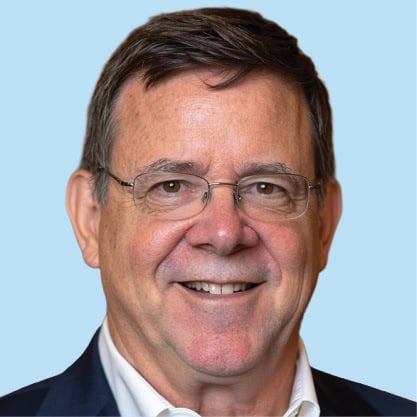
Tom Shephard is a managing principal consultant and author dedicated to reducing the risk of incidents and major accidents across the oil & gas and hydrocarbon sectors. Over a 45-year career he has developed multidisciplinary knowledge in process automation, functional safety, process safety, human factors, best practices and capital project execution—an uncommon combination that informs his approach to complex safety challenges. Following the 2010 Macondo accident, Tom focused intently on the frequently overlooked and poorly understood root causes of catastrophic incidents, bringing human-centered analysis to safety-critical systems and barrier design.
His comprehensive and extensively researched 2024 book, “Human Barrier Design and Lifecycle: a Cognitive Ergonomics Approach and Path Forward” (CRC Press), is the first major product of that effort and introduces the ISA HDAB Framework as one path forward. The book also outlines additional paths aimed at expanding global HDAB awareness, validating the Framework model and developing practical HDAB support tools that address design, assurance and lifecycle management of human-dependent active barriers.
From Insight to Impact: Applying Personality Assessments for Workplace Effectiveness
Technical expertise is essential for success in engineering and automation environments, but high-performing teams require more than technical skills alone. Differences in personality, communication preferences, decision-making styles and problem-solving approaches can significantly influence team dynamics, collaboration and overall performance. Understanding and effectively leveraging these differences can transform workplace relationships and improve organizational outcomes.
This brief session will explore how personality assessments, such as Insights Discovery, can serve as practical tools to enhance self-awareness, strengthen communication and foster more productive collaboration across teams. Participants will learn how personality preferences influence workplace behaviors, leadership effectiveness, conflict resolution and responses to change. Through real-world examples and actionable strategies, attendees will discover a simple framework for translating assessment results into meaningful workplace applications.
Designed for both early-career engineers and experienced leaders, this presentation provides practical techniques for aligning individual strengths with team needs, adapting communication styles to diverse audiences and building healthier, more effective working relationships. Whether leading a team, contributing as an individual performer or working across functions, participants will leave with immediately applicable insights to reduce friction, increase engagement, and create more cohesive, adaptable and high-performing teams. Through a deeper understanding of self and others, attendees will learn to translate personality insights into measurable workplace impact.
Presenter: Joe Rollins
Topic(s): Communication & Influence *Professional Development Workplace Effectiveness Emotional Intelligence
Type(s): Career Skills Stage
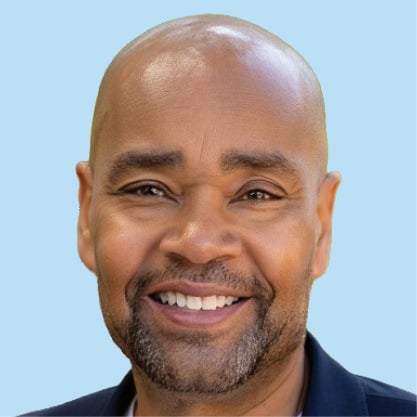
Joe Rollins is the control systems & software learning and development manager for Emerson Automation Solutions, with more than 35 years of experience in talent, leadership and organizational development. He brings over 25 years of semiconductor industry experience and nearly 19 years of experience supporting automation systems, software and solutions in project environments.
Joe has held leadership roles at Emerson, Intel and Advanced Micro Devices. He specializes in leadership development, succession planning, change management, workforce development, talent acceleration and career coaching. He is also a Korn Ferry 360 Certified Feedback Coach and a certified Insights Discovery and DiSC Practitioner.
Opening Forum: AI vs AI Across Industry Sectors
What happens when Artificial Intelligence (AI) systems compete, collaborate and challenge one another across industries? This panel brings together leaders and innovators to explore how intelligent technologies are reshaping the way businesses operate, compete and create value.
From manufacturing, to automotive and oil and gas, this panel will examine where AI is driving the greatest transformation—and where human judgment remains essential. Panelists will debate competing approaches to AI adoption, automation, innovation, governance and responsible implementation, while exploring what it takes to stay ahead as AI capabilities rapidly evolve.
Expect a candid, forward-looking conversation about who wins, what changes and what comes next when AI becomes both the disruptor and the competitive advantage.
Presenters:
Topic(s): *Artificial Intelligence (AI) Communication & Influence
Type(s): Keynotes & Panels Stage
Steve Mustard, PE, CAP, GICSP, CMCP, has over 35 years of experience in the automation industry. He has developed embedded software and hardware for military applications and created products for industrial automation and control systems. Currently, much of his work focuses on assessing the cybersecurity readiness of organizations in critical infrastructure.
In addition to being the former 2021 ISA President, Mustard holds multiple certifications and professional engineering licenses. These include being a licensed Professional Engineer (PE), an ISA Certified Automation Professional (CAP), a UK-registered Chartered Engineer (CEng), a Fellow of the Institution of Engineering & Technology, a European-registered Engineer (EUR Ing), a Global Industrial Cyber Security Professional (GICSP) and a Certified Mission Critical Professional (CMCP).


Dennis Hackney is a cybersecurity leader with 25 years of experience specializing in operational technology (OT) security for the energy sector. He designs and deploys advanced cybersecurity solutions for industrial environments and supports industry compliance efforts as an adjunct professor at Texas A&M School of Law. He holds a PhD in information security, along with degrees in electronic systems applied sciences and business administration.
Expo Charge Up
Cybersecurity and Privacy Considerations for Right to Repair
This talk will outline the broad strokes of cybersecurity and privacy frameworks, regulatory domains and best practices as they relate to repairable products and the companies that produce them. From critical infrastructure and automotive to agriculture and consumer products, the impacts of cybersecurity and privacy are felt by individuals and companies.
We will address how companies that create and advocate for the right to repair (RtR) products can mitigate real security and privacy risks and counter overstated claims by corporations and government organizations that RtR products are inherently less safe than proprietary, closed-system products. We will touch on relevant state and federal RtR legislation and draw parallels between the modern RtR movement and the Free and Open Source Software movement of 30 years ago.
Attendees will take home talking points and references to guide discussions and decisions on cybersecurity and privacy for anyone doing business, and on creating products that are repairable and maintainable by the people who buy them.
Presenter: Andrew Seely
Topic(s): *OT Cybersecurity *Critical Infrastructure Protection Robotics & Autonomous Operations
Type(s): ISAGCA OT Cybersecurity Stage
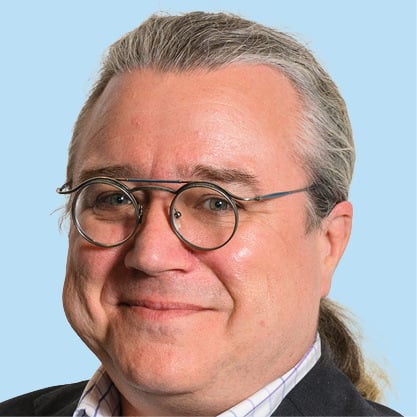
Andy Seely is the consulting senior technical advisor for cybersecurity and solutions architecture at the defense contracting firm Venatôre and a full-time faculty member teaching computer science at Hillsborough College in Tampa, Florida. His 30 years of professional experience include serving as director of architecture and engineering at the cybersecurity firm MindPoint Group, vice president for solution architecture for national security and space at SAIC and engineering and leadership roles at General Dynamics, Northrop Grumman and Computer Science Corporation.
Andy is also the vice president for membership and geographic activities for the IEEE Computer Society, the world’s leading society for computing and engineering. In his executive role, he sets the agenda for global membership, which serves over 50,000 students and professionals worldwide, and oversees committees for geographic activities, awards and recognition, distinguished visitors, students and young professionals and new initiatives.
How to Survive the AI Takeover: Responsible Deployment of Automation in Manufacturing
Artificial intelligence (AI) is moving rapidly into manufacturing, from machine learning for predictive maintenance and computer vision on the factory floor to generative AI for engineering, purchasing, documentation and customer-facing work. But responsible implementation begins with a deceptively simple question: where does AI actually belong?
AI has not invented bad automation. Manufacturers have long had to contend with poorly designed processes, misleading models and misplaced trust in data and systems that are given more authority than they should have. AI can make those mistakes easier to scale and harder to recognize because increasingly capable systems can produce answers, recommendations, software and actions that appear remarkably convincing even when they are wrong.
This session examines those challenges through concrete examples from manufacturing, automation and human-AI interaction. What can we learn from a manufacturer whose purchasing and accounting models accurately reflected its costs yet led management to the disastrous conclusion that it should eliminate internal manufacturing altogether? Why do safety-critical systems sometimes use independent, redundant channels that shut down a process when they disagree? When is computer vision an excellent way to determine whether an area is clear and when should a conventional light screen, force sensor, interlock or other deterministic safeguard remain the final authority? And what changes when an AI assistant moves from helping an engineer write or analyze PLC code to being allowed to alter the state of an automation cell itself?
The same questions arise beyond the factory floor. Generative AI can help an individual employee draft a document, analyze purchasing data, investigate lead times or communicate with a customer much faster. But organizations should distinguish between augmenting an employee and automating an entire business process. Sometimes the better solution is not AI at all, but conventional process engineering: a well-designed database, dashboard, workflow or purchasing tracker may be more reliable, transparent and maintainable than introducing a probabilistic system simply because AI is available.
These examples point to a broader issue at the heart of AI ethics and governance: authority. There is an important distinction among systems that inform, recommend and act. The consequences of an incorrect prediction about future maintenance needs are very different from those of an incorrect purchase order, customer commitment, PLC modification or safety decision. Responsible AI implementation, therefore, requires organizations to consider not only whether an AI system performs well but also what happens when it fails, whether that failure is detectable and reversible and what safeguards should exist between a model's output and consequential action.
Drawing on research in human-AI collaboration, experience with small manufacturing organizations and examples from industrial automation, this talk will explore how manufacturers can leverage increasingly capable AI without abandoning the engineering principles that made modern automation reliable. The future of manufacturing is unlikely to be a choice between people, conventional automation and AI. The more interesting and more important challenge is deciding what each should be allowed to do.
Presenter: Dr. Johnathan Mell
Topic(s): *Artificial Intelligence (AI) *Case Studies on New Technologies Change Management Emotional Intelligence
Type(s): Emerging Technologies & Process Control Stage

Dr. Johnathan Mell is a professor, researcher and technology innovator working at the crossroads of artificial intelligence (AI), human behavior and engineering. Dr. Mell is a tenure-track professor at the University of Central Florida, where he lectures on AI in video games, and leads the ScionAI lab, which researches topics relating to making and understanding more human-like AI systems across manufacturing and industry.
He received his Ph.D. and Master's in Computer Science from the University of Southern California and holds bachelor's degrees from University of Pennsylvania School in Engineering and from the Wharton School of Business. Dr. Mell has appeared at numerous global conferences and is also regularly invited as a panelist or speaker to both academic conferences and popular science venues to discuss AI. He aims to connect business, gaming and cutting-edge AI in a fully integrated way utilizing modern techniques to make consistent, trustworthy and useful AIs. His current work is focused on artificial negotiation, social emotions in AI and agentic AI systems for defense, entertainment and healthcare.
Fireside Chat: Digital Literacy Skills for the Modern Automation Engineer
The modern automation engineer needs more than technical depth—they also need digital literacy, adaptability and leadership skills to succeed in today’s connected industrial environment. This fireside chat will explore how digital roles are evolving, where the biggest talent and capability gaps lie and what organizations can do to prepare their workforce for the future. This session will offer practical insights into building the skills, mindsets and career pathways needed to develop future-ready engineering talent.
Presenters:
Topic(s): *Professional Development Workplace Effectiveness Skills Gap
Type(s): Career Skills Stage

Jasmeen is a sales enablement and digital growth professional with more than a decade of experience across industrial automation, process control, technical sales, business development and digital transformation. At Spartan Controls, she leads initiatives that equip sales and management teams with actionable tools and insights and drive adoption of customer-facing digital platforms and solutions.
Throughout her career, Jasmeen has built a strong track record of translating customer needs into business value, developing technical solutions, generating new opportunities and creating meaningful customer experiences. Her experience includes application engineering for valves and actuation, technical inside sales, digital business development and cross-functional leadership across sales, marketing and technical teams.
Jasmeen combines technical industry knowledge with a strong customer and commercial focus, leveraging data, customer feedback and digital technologies to improve engagement, operational efficiency and business growth. She is passionate about connecting people, technology and business strategy to create scalable solutions that deliver lasting customer value. She also completed the Emerging Leadership Development Program at the Haskayne School of Business.

Andrew McDonald is Founder and Managing Director of FutureofManufacturing LLC, advising manufacturers on digital transformation, automation, AI and the transition from pilot projects to scalable operational solutions. A control engineer by background, Andrew spent more than 20 years with Unilever in senior global and North American manufacturing roles, including Global Automation Engineer, Director of Digital Factory and Director of Future Manufacturing. He has led automation, digital manufacturing and advanced analytics initiatives across complex CPG operations and now works with manufacturers on the practical challenges of defining AI use cases, integrating data and operational technology, engaging subject-matter experts, validating solutions and creating the organizational conditions required to scale AI successfully. Andrew is also an active contributor to ISA initiatives examining how AI will reshape automation engineering and manufacturing.

Sujata is a successful entrepreneur, technologist and thought leader in the Industrial Internet of Things (IIoT) and the convergence of industrial automation and information technology. As a leader at Ascent Intellimation, she has helped establish the company as a leading provider of IIoT solutions, enabling organizations to harness connected technologies and manufacturing data to drive smarter operations. Under her leadership, Ascent has developed PlantConnect, an Industrial IoT platform deployed across applications including environmental monitoring, smart manufacturing and reliability engineering.
Sujata is passionate about helping organizations unlock the value of manufacturing data and recognize the many ways it can support stakeholders across the enterprise. With a strong vision for the future of connected industry, she focuses on bridging technology, data and business needs to enable more intelligent, efficient and sustainable manufacturing.
Cyber-Physical Triad
The Cyber-Physical Triad is a three-pillar model designed to bring modern automation systems, both discrete mechatronics and process automation and cognitive computing, under a single governed infrastructure.
- Discrete machine automation & robotics: A "physical layer" that brings robotics, process controls and machine cells under ISA-governed lifecycle and data models.
- Software-defined automation (SDA): A "nervous system" consisting of a manufacturer-agnostic abstraction layer that decouples execution logic from physical hardware.
- Agentic AI: A "cognitive layer" that uses a "library-first" methodology to serve as an intelligent orchestrator of ISA-certified, pre-debugged code blocks.
Presenters:
Topic(s): *Artificial Intelligence (AI) Robotics & Autonomous Operations *Case Studies on New Technologies Industrial Control Systems (ICS) Data Connectivity *Instrumentation & Process Control Industrial Data Architecture
Type(s): Keynotes & Panels Stage
Dr. Brian Romano, Ph.D., is vice president of engineering and technology at The Arthur G. Russell Company, with a career spanning more than 40 years in industrial automation. He directs AGR’s strategy for integrating advanced control platforms, IIoT sensors and Industry 4.0 principles into automated assembly systems. Previously, he founded and led a successful systems-integration firm that connected factory-floor automation with enterprise IT systems.
An active ISA contributor, Dr. Romano serves on the Smart Manufacturing TAC and the ISA Automation Summit Content Committee. His contributions to the field earned him the 2022 ISA SM/IIoT Division Leader of the Year award and selection as a 2025 ISA Fellow. He holds a Ph.D. in Technology and Innovation, an MBA in Data Analytics and degrees in information systems and computer science. Committed to workforce development, he teaches automation and control systems at the University of Hartford and Central Connecticut State University and is a pilot and retired major in the US Air Force Auxiliary (The Civil Air Patrol).

David Schultz is a principal consultant at Amárach StackWorks. He works with manufacturers to develop and execute strategies for their digital transformation and asset performance management initiatives. He has nearly 30 years of experience with automation and manufacturing execution systems across multiple market verticals. He is a member of the International Society of Automation (ISA), the Society of Maintenance and Reliability Professionals (SMRP) and the Project Management Institute (PMI).
Cyber-Informed Engineering: Building Security into Critical Infrastructure by Design
As cyber threats to critical infrastructure continue to evolve, organizations are recognizing the need to integrate cybersecurity considerations into engineering decisions from the earliest stages of system design. This session will explore the growing adoption of Cyber-Informed Engineering (CIE) from an energy sector perspective, examining how engineering, operations and cybersecurity disciplines can work together to reduce cyber risk and improve resilience.
Participants will learn about ongoing efforts to advance cybersecurity education and curriculum development for engineers, as well as emerging standards, design patterns and quantification methods that help translate cyber risk into engineering requirements and business decisions. The discussion will highlight practical approaches for applying Cyber-Informed Engineering principles across technical, operational and policy domains, enabling organizations to design, operate and maintain more secure and resilient energy systems and critical infrastructure.
Presenters:
Topic(s): *OT Cybersecurity Cyber-Informed Engineering
Type(s): ISAGCA OT Cybersecurity Stage

Virginia “Ginger” Wright is the department manager at the Research Acceleration organization within the Idaho National Laboratory (INL). She has led multiple programs focused on cybersecurity and critical infrastructure resilience for the Department of Energy (DOE), the Defense Advanced Research Projects Agency (DARPA) and other government agencies, including DOE’s Cyber-Informed Engineering initiative (CIE) and the Cyber Testing for Resilient Industrial Control Systems (CyTRICS™️) program.
Virginia's recent research areas include supply chains for operational technology components, incident response, critical infrastructure modeling and simulation and nuclear cybersecurity. She holds a Bachelor of Science in information systems/operations management from the University of North Carolina at Greensboro.
Cheri Caddy is an independent consultant specializing in cybersecurity and emerging technology policy, strategy, technical standards and governance, risk, and compliance issues. She is a senior cybersecurity advisor to Savannah River National Laboratory and a member of several advisory boards, including the Technology Advancement Center. She also chairs the Board of Fellows Visiting Committee of the Leahy School of Cybersecurity and Advanced Computing at Norwich University.
Ms. Caddy held senior national security technical and policy roles in the US Government for over 30 years. Prior to retiring from federal service, she served as deputy assistant national cyber director for technology and research in the Office of the National Cyber Director at the White House (ONCD), where she was the executive technical lead for the development and implementation of the 2023 National Cybersecurity Strategy and a principal contributor to the 2023 National Standards Strategy for Critical and Emerging Technology.
She recently served as senior technical advisor for cybersecurity at the US Department of Energy (DOE). While there, she managed a $60M portfolio of cyber-related research and development (R&D) across the national laboratories, coordinated cyber R&D across the department and represented DOE at the National Science and Technology Council.
Ms. Caddy’s other senior technical and policy roles have included: executive director of the Enduring Security Framework at the National Security Agency (NSA), director for cybersecurity at the National Security Council and senior cyber policy advisor at the Office of the Director of National Intelligence.
She holds degrees from the University of Virginia, American University and Norwich University Military College of Vermont, and has been a Senior Cybersecurity Fellow at the McCrary Institute for Cybersecurity & Critical Infrastructure at Auburn University since 2017.
Are You Ready for an AI-Automated Future?
Artificial intelligence (AI) is beginning to transform every discipline, including the work traditionally performed by instrumentation and control professionals. As industrial organizations deploy more advanced automation, analytics, digital twins, AI-assisted engineering tools and autonomous control concepts, expectations for I&C engineers and technicians—broadly defined here as automation professionals—are expanding beyond conventional control system design, instrumentation specification, commissioning and troubleshooting.
A future-ready automation professional workforce will need to understand not only programmable logic controllers (PLCs), distributed control system (DCS) platforms, safety instrumented systems (SISs), field instrumentation and control narratives, but also how AI models are developed, validated, governed and safely integrated into industrial operating environments.
Through practical use-case presentations and concepts that illustrate how AI is already influencing the world of automation—from neural-network-based control and AI-assisted engineering workflows to workforce strategies for addressing emerging capability and skills gaps—this session will serve as an initial forum for discussion and discovery toward that end.
This live, in-person expert conversation serves as a follow-up to the recent ISA thought-leader webinar of the same name. It is intended to continue the conversation, encourage participants to share even more current use cases from their own organizations, identify future employee skill needs and, particularly, provide examples of how AI is improving engineering productivity, decision quality, system reliability, knowledge capture or the speed of automation project execution and process operations.
Brought to you by the ISA Workforce Architecture Taskforce
Presenters:
Topic(s): *Professional Development *Artificial Intelligence (AI) Skills Gap *Instrumentation & Process Control *Case Studies on New Technologies Soft Sensors & Advanced Process Analytics Robotics & Autonomous Operations
Type(s): Career Skills Stage
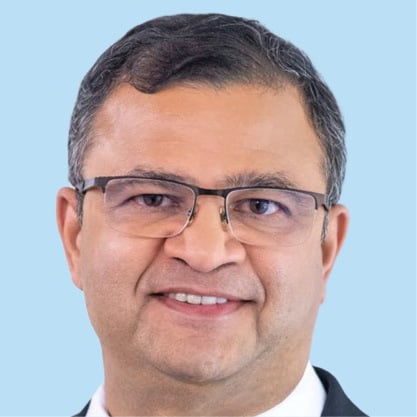
Rajeev Limaye is a Technical Director at Worley Consulting in Houston, Texas, with more than 30 years of experience in industrial automation. His recent work focuses on functional safety, autonomous operations, digital solutions, AI-enabled engineering and neural network-based plant control. Rajeev holds a master’s degree in chemical engineering from IIT Bombay and an MBA from the University of Houston. He is a registered Professional Engineer (PE) in Texas and a Certified Functional Safety Expert (CFSE). He also serves as an advisor and adjunct faculty member at the University of Houston Downtown.
Andrew McDonald is Founder and Managing Director of FutureofManufacturing LLC, advising manufacturers on digital transformation, automation, AI and the transition from pilot projects to scalable operational solutions. A control engineer by background, Andrew spent more than 20 years with Unilever in senior global and North American manufacturing roles, including Global Automation Engineer, Director of Digital Factory and Director of Future Manufacturing. He has led automation, digital manufacturing and advanced analytics initiatives across complex CPG operations and now works with manufacturers on the practical challenges of defining AI use cases, integrating data and operational technology, engaging subject-matter experts, validating solutions and creating the organizational conditions required to scale AI successfully. Andrew is also an active contributor to ISA initiatives examining how AI will reshape automation engineering and manufacturing.
Expo Power Hour
Lunch
Panel Sponsored by ISAGCA: ISASecure Certification for Manufacturers Demonstrating Compliance to Government Cybersecurity Requirements
ISASecure®, a wholly owned subsidiary of ISA, develops conformity assessment schemes that help manufacturers demonstrate product compliance with government cybersecurity requirements.
ISASecure is partnering with the US National Security Agency (NSA) to develop the High Criticality Component Security Assurance (HCSA) certification scheme for commercial operational technology (OT) components sold by manufacturers and procured by the US government for use within National Security Systems (NSS). HCSA is derived from the well-established ISASecure Component Security Assurance (CSA) certification scheme and adds additional product security requirements found in the NSA/CSS Cybersecurity Technical Report titled "Operational Technology Assurance Partnership: Smart Controller Security within National Security Systems" (April 2025).
Meanwhile, the European Union (EU) enacted the Cyber Resilience Act (CRA). The CRA sets mandatory cybersecurity requirements for all products with digital elements sold in the EU. As a result, cybersecurity standards and conformity assessment schemes are being revised to help manufacturers meet the CRA requirements for selling products in the EU market.
The panelists will discuss the new ISASecure HCSA scheme and further explain how its eight (8) new requirements compare with the EU CRA Essential Cybersecurity Requirements.
Presenters:
Topic(s): *OT Cybersecurity
Type(s): Keynotes & Panels Stage
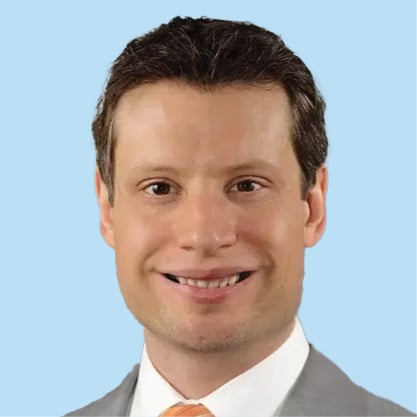
Dr. Mark P. DeAngelo is the Program Manager of the ISA Security Compliance Institute and the ISA100 Wireless Compliance Institute, commonly referred to as ISASecure and ISA100 Wireless. He provides staff leadership for ISA’s conformance certification programs, including the ISASecure control systems certification program managed under the ISA Security Compliance Institute.
Previously, Dr. DeAngelo worked as a systems safety engineer working on autonomous systems and commercial derivative aircraft at Boeing Defense, Space & Security. Before joining Boeing, he worked as the Aerospace Initiatives Manager for SAE International, where he served as SAE’s spokesperson for advanced air mobility standards and integration activities, collaborating with SAE, NASA, FAA, ICAO, international civil aviation authorities and industry.
He earned a B.S., M.S. and Ph.D. in aerospace engineering from the Pennsylvania State University. He also holds an FAA Part 61 Private Pilot Certificate. His hobbies include photography with publications in the Smithsonian Air & Space Magazine, Miami New Times and awards from the Pittsburgh Post-Gazette and Point Park University.
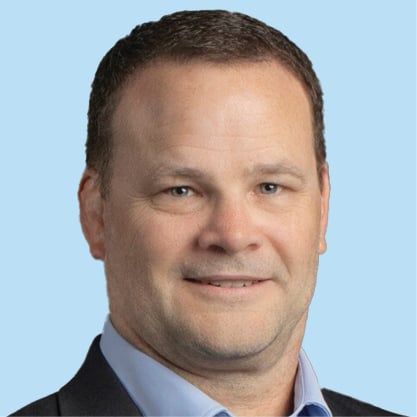
Tim Gale is a seasoned industrial cybersecurity and process safety specialist with more than 30 years of experience advising multinational organizations across the energy, oil and gas, chemical manufacturing and pharmaceutical sectors. Drawing on his background as a process control engineer, Tim evaluates process hazards, control system architectures and cybersecurity risks as an integrated whole.
His international experience includes assessments across North America, Europe and Asia, as well as specialized work supporting critical infrastructure resilience and national security missions. He contributed to the US Department of Energy (DOE) Cyber-Informed Engineering Implementation Guide and the Top 20 Secure PLC Coding Practices.

Michael R. Dransfield is a senior executive service technical SME at the National Security Agency (NSA) with a career spanning 35+ years. He’s currently focused on operational technology (OT) cybersecurity within the NSA Cybersecurity Directorate. He holds BA and MS degrees in applied mathematics from West Virginia University and is a co-author of three US patents in algorithm design.

Peter has over 25+ years of experience in consulting and research in several areas of information security and assurance and has held senior technical and management positions with Telcordia Technologies (previously known as Bellcore). During his career, Peter conducted security research and provided cybersecurity advisory support for various commercial and government organizations, including the Laboratory for Telecommunication Sciences, NIST, Federal Reserve Bank, Department of Labor, Verizon Wireless, Sprint, among others and cyber preparedness for the Athens 2004 Olympics.
As founder of Palindrome Technologies and subject matter expert, he is assisting customers with securing emerging technologies and networks, including 5G, MEC, IoT and V2X. Peter is the primary author of the book “Securing VoIP Networks” by Addison-Wesley and has been a speaker at various industry conferences (i.e. IEEE, ICIW, SANS, Blackhat, MIS InfoSec, ISSE), NATO NMIOTC Cybersecurity conference and has published research papers in academic and industry journals (i.e., IEEE, ACM, ISSA, IEC) and articles in trade magazines such as Information Security, ZDNET, Forbes, TechTarget and Wired.
Furthermore, he has been the Co-Chair for IEEE CQR Workshop, IEEE World Forum IoT and committee member of ICCWS. Peter is a contributor to the FCC CSRIC VII Report on Risk to 5G from Legacy Vulnerabilities and Best Practices for Mitigation (10 June 2020) and currently a working member with the CSRIC IX WG3 on 6G Security. Peter holds a Master’s degree in Computer Science from Columbia University and is a senior member of IEEE and ISSA.
Steve Mustard, PE, CAP, GICSP, CMCP, has over 35 years of experience in the automation industry. He has developed embedded software and hardware for military applications and created products for industrial automation and control systems. Currently, much of his work focuses on assessing the cybersecurity readiness of organizations in critical infrastructure.
In addition to being the former 2021 ISA President, Mustard holds multiple certifications and professional engineering licenses. These include being a licensed Professional Engineer (PE), an ISA Certified Automation Professional (CAP), a UK-registered Chartered Engineer (CEng), a Fellow of the Institution of Engineering & Technology, a European-registered Engineer (EUR Ing), a Global Industrial Cyber Security Professional (GICSP) and a Certified Mission Critical Professional (CMCP).
What if it Happened Here? Building Executive Support for OT Security
OT security is not fundamentally a technology problem—it is a leadership and change-management challenge. A sustainable program begins with an uncomfortable first step: admit that you have a problem. But recognizing the risk within the security team is not enough; leaders must connect it to the priorities executives already own, including safety, production, business continuity, revenue and reputation. Drawing from his upcoming book, Chris McLaughlin explains how to identify organizational support and resistance, translate technical exposures into business consequences and use credible stories from real cyber incidents to help boards and senior executives ask, “What if this happened here?” Attendees will learn practical techniques for engaging leaders, focusing conversations on decisions and actions, and turning awareness into the sponsorship, resources and accountability required to build an OT security program that lasts.
Presenter: Chris McLaughlin
Topic(s): *OT Cybersecurity Communication & Influence *Professional Development Change Management Emotional Intelligence ISA/IEC 62443 Implementation
Type(s): ISAGCA OT Cybersecurity Stage

Chris McLaughlin is the founder and principal consultant of Trusted OT Advisors, a firm specializing in industrial and operational technology (OT) cybersecurity. He has more than 25 years of cybersecurity experience, including more than a decade as a chief information security officer (CISO) for a global manufacturer. McLaughlin was named one of the nation's Top 100 CISOs by CISOs Connect in 2022, 2025 and 2026.
As an active leader in the International Society of Automation (ISA), he served as vice chair of the ISA Global Cybersecurity Alliance Advisory Board from 2023 to 2025 and is a strong advocate for ISA/IEC 62443 standards. A frequent industry speaker, McLaughlin is authoring the book “Building a Sustainable OT Security Program: A Practical Seven-Step Guide.” He is known for translating complex cybersecurity challenges into practical strategies that strengthen collaboration between IT and engineering teams while protecting critical operations.
Toward Autonomous Inspection and Maintenance in Complex Industrial Environments
Autonomous robotic systems have the potential to transform industrial inspection and maintenance by improving operational safety, reducing worker exposure to hazards and increasing productivity. Real-world deployment, however, remains challenging due to complex facility layouts, constrained workspaces and operational hazards such as high-voltage equipment.
This session presents two complementary learning-based approaches that address key challenges in autonomous industrial robotics. The first is a DreamerV3 world-model-based navigation framework that integrates physics-informed hazard awareness into local navigation, enabling data-efficient and safety-aware robot autonomy. The second is a whole-body manipulation framework that jointly controls a mobile base and a manipulator, enabling robots to perform maintenance tasks in cluttered, confined spaces.
Experimental results demonstrate the potential of these approaches to support reliable autonomous inspection and maintenance in industrial facilities, laying a foundation for more intelligent and resilient robotic operations. These capabilities are being extended to support two DOE GENESIS projects focused on autonomous operation of advanced fission reactors and on autonomous robotic systems for fusion energy applications, highlighting the growing role of robotics in next-generation energy infrastructure.
Presenter: Fan Zhang
Topic(s): Robotics & Autonomous Operations *Artificial Intelligence (AI) Industrial Control Systems (ICS) *Instrumentation & Process Control *Case Studies on New Technologies Soft Sensors & Advanced Process Analytics Cyber-Physical Security
Type(s): Emerging Technologies & Process Control Stage

Dr. Fan Zhang is an Assistant Professor and College of Engineering Cybersecurity Fellow at the Georgia Institute of Technology, where she directs the Intelligence for Advanced Nuclear (iFAN) Lab. Her research focuses on robotics, digital twins, AI-enabled predictive maintenance, autonomous control and cybersecurity for advanced energy systems. She is actively engaged in IAEA nuclear cybersecurity research and education and has contributed significantly to nuclear instrumentation and control, digital engineering and cybersecurity. Dr. Zhang has received the ANS Ted Quinn Early Career Award, the inaugural DOE Office of Nuclear Energy Distinguished Early Career Award, the ANS Landis Young Engineering Achievement Award, ANS 40 Under 40, the Georgia Tech Innovator Award and the Georgia Tech Outstanding Research Award. In 2023, she was selected by the National Academy of Engineering to participate in the EU-U.S. Frontiers of Engineering Symposium.
From Technical Contributor to Project Leader: Best Practices for Managing Projects Without Formal Project Management Certification
Many automation professionals find themselves managing projects before they have formal project management training or certification. Whether leading a controls upgrade, SCADA implementation, robotics deployment or system integration effort, technical expertise alone is rarely enough to ensure project success.
This presentation shares practical best practices for successfully leading projects, including how to transition from technical contributor to project leader, improve communication across teams and deliver successful outcomes from project kickoff through commissioning and startup.
Presenter: Jack Wilson
Topic(s): *Professional Development Change Management Stakeholder Engagement Communication & Influence Skills Gap Emotional Intelligence Workplace Effectiveness
Type(s): Career Skills Stage

Jack Wilson has advanced his career in data analysis, interpretation and governance, working across the energy, finance, healthcare, government and nonprofit sectors.
Presenting data as a story has been the foundation of his work in the Caribbean, North Africa and the US, while his wide range of work and volunteer experience, including threat assessment, disaster response, microfinance and small business development in Cambodia and Mexico, has helped shape his view of transitional skills.
He has served on the Board of Directors of InfraGard Houston, the Houston Chapter of the Project Management Institute, and on the Advisory Board of the YMCA International in Houston. He currently holds a leadership position with the Houston Section of the International Society of Automation.
Session Sponsored by Fortinet: Zero Trust in Action
While the conceptual benefits of Zero Trust for industrial control systems (ICS) are widely accepted, the actual implementation within legacy, high-availability environments remains a unique challenge for automation and controls engineers. Moving past the theoretical architecture, this fast-paced, 20-minute session delivers concrete solutions learned from deploying Zero Trust principles across diverse operational environments.
We will bypass standard marketing definitions and focus on practical strategies for enforcing least-privilege access, achieving granular micro-segmentation without risking downtime and establishing continuous monitoring across critical assets. Attendees will walk away with actionable insights on how to leverage a unified security fabric approach to simplify their defensive architecture, satisfy ISA/IEC 62443 requirements and protect legacy control systems without sacrificing operational reliability or safety.
Presenter: Matt Bolick
Topic(s): Industrial Control Systems (ICS) *OT Cybersecurity ISA/IEC 62443 Implementation *Critical Infrastructure Protection Cyber-Physical Security Communication & Influence
Type(s): ISAGCA OT Cybersecurity Stage

Matt Bolick is a Principal Engineer and cybersecurity leader specializing in the protection of critical infrastructure and resilient networking. With extensive experience at industry leaders like Cisco and Fortinet, he has dedicated much of his career to securing Operational Technology (OT) and developing robust solutions for cyber physical systems.
Technical Storytelling That Drives Decisions
In today’s workplace, technical expertise alone is not enough; professionals also need to communicate complex ideas in ways that capture attention, build understanding and drive action. As more organizations prioritize storytelling as a core business skill, the ability to translate data, processes and technical concepts into clear, compelling narratives is becoming essential across industries.
Technical storytelling that drives decisions explores how techniques such as structure, audience awareness and storyboarding can help professionals make information more accessible and persuasive. Attendees will learn to shape technical content into narratives that support better alignment, stronger engagement and more confident decision-making. This session will offer practical ways to turn expertise into influence by helping others not only understand the information but also act on it.
Presenter: Edward Naranjo
Topic(s): *Professional Development Communication & Influence Emotional Intelligence
Type(s): Career Skills Stage
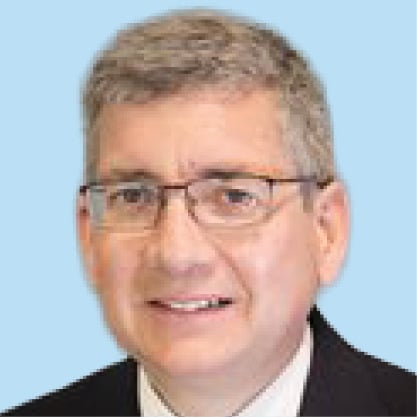
Dr. Edward Naranjo is a general manager and technology executive specializing in industrial automation, process safety and product management. Throughout his career, he has driven profitable growth by leveraging IIoT and advanced analytics to enhance operational efficiency.
Currently, Dr. Naranjo is director of sales at Kenexis. He previously held leadership roles at Honeywell, Emerson and MSA. He is an ISA Fellow and served on the Executive Board of the International Society of Automation (ISA). He has published 21 technical articles and received numerous honors, including the ISA Division Leader Excellence award.
He holds a PhD and BS in Chemical Engineering from UC Santa Barbara and Caltech, respectively and an MBA from the University of Chicago.
A Review of Property Cybersecurity Incidents
While not widely reported, incidents at properties occur more often than is disclosed. This talk walks through six separate attacks and examines what happened at each facility. It also covers how to defend against future attacks and how to map defenses to ISA/IEC 62443. Attacks are likely to increase because of tenants’ and owners’ growing interconnectivity demands: OEMs are developing apps that expand the attack surface required for products to deliver full functionality. Building owners are also adopting automation, data and IoT to achieve regulatory and corporate sustainability goals, which can introduce additional risk. Attendees will leave with real‑world scenarios and practical controls they can implement to prevent similar attacks and align property systems with ISA/IEC 62443.
Presenter: Thomas Pope
Topic(s): *Critical Infrastructure Protection *OT Cybersecurity Cyber-Physical Security ISA/IEC 62443 Implementation
Type(s): ISAGCA OT Cybersecurity Stage

Thomas Pope is a cybersecurity leader specializing in operational technology across multiple sectors and currently leads property-focused cybersecurity as Head of Property Cybersecurity at JLL. He concentrates on protecting modern buildings and property portfolios amid increasing connectivity and tenant-driven requirements. Thomas brings more than a decade of hands-on experience across IT and cybersecurity domains—including threat intelligence, incident response and vulnerability management—with a strong emphasis on critical infrastructure protection.
His prior roles include serving as a Senior Incident Commander at Cisco Talos, where he managed customer incidents and delivered proactive security services, and working as an Adversary Hunter at Dragos, researching industrial threats, conducting threat intelligence analysis and supporting security research and industry education. While at Duke Energy, Thomas contributed to building threat intelligence, vulnerability management and operational security capabilities across IT and OT environments with a focus on NERC CIP compliance. He holds multiple ISA/IEC 62443 certifications and several SANS certifications, underscoring his expertise in OT security and standards-aligned defense.
Emerging Computer Vision Technologies for Anomaly Detection in Manufacturing and Industrial Operations
This session examines the evolving landscape of automated inspection, detailing how computer vision is revolutionizing anomaly detection across manufacturing and critical operations. We will explore state-of-the-art AI-based methods, tracing the progression from classic rule-based imaging systems to cutting-edge AI model classes and evaluate whether deep learning will fully replace or run alongside these foundational methods. We will also discuss the limitations of computer vision models and their dependence on data. Furthermore, we will discuss real-world use cases, including the detection of manufacturing defects, automated traffic and incident management and oil and gas safety inspections.
We will review today's practical accuracy benchmarks and the field's future trajectory, address data bottlenecks and highlight how real-world data availability shapes model development. Finally, we will analyze the bottom-line realities of deployment scalability, edge processing and the total cost of system ownership.
Presenter: Yaser P. Fallah
Topic(s): *Artificial Intelligence (AI) Robotics & Autonomous Operations *Instrumentation & Process Control
Type(s): Emerging Technologies & Process Control Stage
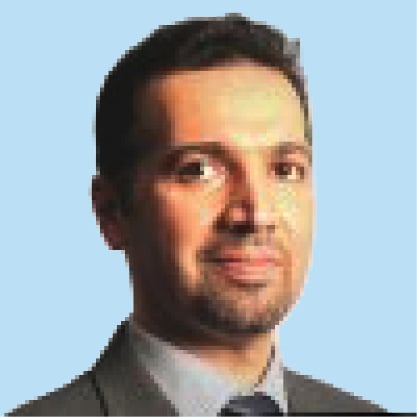
Dr. Yaser P. Fallah is a professor at the University of Central Florida and serves as director of the Robotics and Autonomous Systems graduate program. Over a 17+ year career he has focused on AI, autonomous vehicles (AV), robotic perception and decision‑making for safety‑critical transportation systems. Dr. Fallah has collaborated with major OEMs including Ford, GM, Hyundai, Toyota and Honda and is an inventor of scalability algorithms for vehicle safety networks that have been adopted into SAE standards. His work on Cooperative AI represents pioneering efforts in collaborative perception for AVs, advancing how vehicles share and interpret sensor information to improve safety and situational awareness. He co‑founded Conro AI, a smart‑city AI company headquartered in Orlando. Dr. Fallah earned his Ph.D. in Electrical and Computer Engineering from the University of British Columbia in 2007 and began his career in Intelligent Transportation Systems at UC Berkeley (2008–2011). He received an NSF CAREER award in 2016 and the UCF Luminary Award in 2022.
Distributed Workflows and Why Your Best Tool Might be Hiding in the Unexplored Realms Between IT and OT
The promise of the industrial digital thread — a seamless flow of data from sensor to boardroom — often stalls at the “twilight zone” between IT and OT. While organizations have mastered digital twins, they still struggle with the distributed workflows required to act on that data. Interoperability gaps between supervisory control, automated manufacturing and enterprise logistics create silos and force reliance on bespoke unscalable integrations that crumble under modern AI-driven demands.
Consider the 10th-century Silk Road merchant: traversing thousands of miles across disparate languages and cultures required more than grit; it required a common set of trade rules and protocols. Today’s industrial enterprise faces a similar gauntlet. We cannot expect to bridge the gap between real-time manufacturing and high-level business logistics without a unified architectural language.
With an ever-growing base of protocols, vendors, management systems and software, the suites and structures that aim to connect them remain pieces of a puzzle that have yet to coalesce into an enterprise-wide picture.
The ISA-113 Distributed Workflow System Integration Committee is addressing this by developing a specification for abstract information-exchange models.
Use cases identified by the committee include:
- Tech transfer between process development and commercial manufacturing or a contract development and manufacturing organization (CDMO)
- Factory-wide plug-and-product with internal or external integration
- Supply chain handoff with deviation tracking and monitoring
By establishing a shared vendor-agnostic understanding of procedural workflows, organizations can move beyond a proprietary “glue code” toward a scalable standardized foundation. This session explores how defining these workflows as the connective tissue of the digital thread allows enterprises to unlock the value hiding in the space between IT and OT.
Presenters:
Topic(s): Industrial Data Architecture Data Connectivity Industrial Control Systems (ICS) Standards & Regulations *Artificial Intelligence (AI) *Instrumentation & Process Control Soft Sensors & Advanced Process Analytics Robotics & Autonomous Operations Emotional Intelligence Workplace Effectiveness Communication & Influence
Type(s): Emerging Technologies & Process Control Stage

Antonio is a highly specialized Controls Engineer with more than a decade of progressive experience designing, implementing and optimizing advanced automation systems for General Motors. He is recognized as a subject-matter expert in automation cells, controls, safety standards and industrial networking, with a strong track record of delivering complex manufacturing solutions. He is experienced in leading technology integration for large-scale electrification programs, overseeing projects from initial design and specification through on-site validation, commissioning and launch.
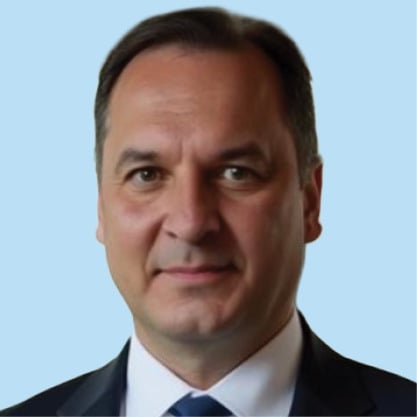
David is a highly experienced Manufacturing Digital Transformation leader with more than 30 years of expertise spanning manufacturing cybersecurity, Manufacturing Execution Systems (MES), operations management, systems integration, data strategy and Smart Manufacturing. His experience extends across pharmaceutical and biopharmaceutical, electronics, automotive, food and beverage, chemical, pulp and paper and other industrial sectors.
He has built his career at the intersection of IT and OT, progressing from automation engineering into leadership roles including Manufacturing Systems Security Manager, Principal Business Analyst, Director of MES Operations, Global IS/MES Delivery Program Manager, Solution Architect and Data Integration Lead. He is recognized for leading complex global transformation initiatives, building high-performing teams, managing P&L operations and delivering scalable technology strategies aligned with business objectives.
A strong advocate for Industry 4.0 and secure digital transformation, he actively contributes to industry standards and organizations including ISA95/99, IEC, ISO, MESA and NIST. His expertise and passion center on connecting people, processes, data and technology to create secure, resilient and efficient manufacturing operations. He holds a B.S. in Electrical Engineering and a Master’s degree in Industrial Management.
Interactive Forum: Navigating Career Success in a Changing Automation Landscape
As the automation and industrial technology landscape evolves, so must our understanding of what it means to build a successful career in it. This town hall invites professionals at every stage to rethink traditional definitions of success and recognize progress as a series of meaningful milestones along an individual's career journey.
This interactive session will allow attendees to ask these experienced professionals how career progress is shaped by both technical competencies and essential soft skills, including leadership, communication, adaptability in navigating transitions across roles and industries and lifelong learning.
Through shared perspectives and practical insights, participants will be encouraged to identify and value their own measures of success, build resilience in the face of change and intentionally develop a balanced skill set that supports both professional effectiveness and personal fulfillment.
Presenters:
Topic(s): *Professional Development Communication & Influence Workplace Effectiveness Emotional Intelligence Skills Gap
Type(s): Career Skills Stage
Dr. Brian Romano, Ph.D., is vice president of engineering and technology at The Arthur G. Russell Company, with a career spanning more than 40 years in industrial automation. He directs AGR’s strategy for integrating advanced control platforms, IIoT sensors and Industry 4.0 principles into automated assembly systems. Previously, he founded and led a successful systems-integration firm that connected factory-floor automation with enterprise IT systems.
An active ISA contributor, Dr. Romano serves on the Smart Manufacturing TAC and the ISA Automation Summit Content Committee. His contributions to the field earned him the 2022 ISA SM/IIoT Division Leader of the Year award and selection as a 2025 ISA Fellow. He holds a Ph.D. in Technology and Innovation, an MBA in Data Analytics and degrees in information systems and computer science. Committed to workforce development, he teaches automation and control systems at the University of Hartford and Central Connecticut State University and is a pilot and retired major in the US Air Force Auxiliary (The Civil Air Patrol).

Edin is the Founder and CEO of Prosera, where he helps industrial organizations better understand, optimize and operate complex systems using Digital Twins, simulation and industrial AI. With more than 15 years of experience with industrial organizations, he brings deep expertise in process simulation, industrial automation and operator training simulators.
Throughout his career, Edin has worked closely with engineering and operations teams to model real-world processes, improve operational performance and reduce risk. He recognized the transformative potential of connecting simulation models with operational data and engineering expertise, enabling organizations to move beyond static analysis toward dynamic, data-driven Digital Twins.
At Prosera, he focuses on bridging the gap between engineering models, production systems, operational data and human expertise. His work helps organizations reduce engineering rework, improve system visibility, capture operational knowledge and make better-informed decisions. His expertise includes Digital Twins, process simulation, operator training simulators, industrial AI, industrial automation and operational optimization.

Mary is an accomplished electrical engineer and automation leader with more than 30 years of experience helping manufacturing and process organizations improve efficiency, reliability and operational performance. Her career spans engineering, project management, technical sales, systems integration and business leadership, giving her a unique ability to align technical solutions with broader business objectives.
She has led complex automation projects from concept and design through commissioning and startup, managing budgets, schedules, cross-functional teams and customer expectations while maintaining a strong focus on safety, quality and results. Her technical expertise includes programmable logic controllers (PLCs), human machine interfaces (HMIs), supervisory control and data acquisition (SCADA) systems, industrial networking, system integration, troubleshooting and commissioning across diverse industrial environments.
Beyond engineering, Mary has extensive experience in customer engagement, solution development, estimating, contract negotiation, sales strategy, budgeting, forecasting, P&L management and operational planning. She is known for understanding customer challenges and translating them into practical, cost-effective automation solutions that deliver measurable business value.
A passionate leader and mentor, Mary believes successful organizations are built on strong teams, clear communication, continuous improvement and data-driven decision-making. She is passionate about automation, innovation and helping organizations and people grow through the effective use of technology.
Sujata is a successful entrepreneur, technologist and thought leader in the Industrial Internet of Things (IIoT) and the convergence of industrial automation and information technology. As a leader at Ascent Intellimation, she has helped establish the company as a leading provider of IIoT solutions, enabling organizations to harness connected technologies and manufacturing data to drive smarter operations. Under her leadership, Ascent has developed PlantConnect, an Industrial IoT platform deployed across applications including environmental monitoring, smart manufacturing and reliability engineering.
Sujata is passionate about helping organizations unlock the value of manufacturing data and recognize the many ways it can support stakeholders across the enterprise. With a strong vision for the future of connected industry, she focuses on bridging technology, data and business needs to enable more intelligent, efficient and sustainable manufacturing.
Preparing for the Future: Industrial Automation in the Post-Quantum Era
Quantum computing is often discussed as a distant scientific breakthrough, yet its implications for industrial automation and operational technology require planning now. A cryptographically relevant quantum computer could undermine the public-key cryptography that protects remote access, device identity, software updates, digital signatures, certificates, vendor communications and trusted connections across industrial environments. Because many automation and process control systems remain in service for decades, organizations cannot wait until quantum-capable systems arrive to begin preparing.
This session will explain what quantum computing does—and does not—mean for industrial cybersecurity, with a practical focus on post-quantum cryptography migration. It will examine where vulnerable cryptography appears across automation architectures, including control systems, engineering workstations, field devices, gateways, historians, remote-access platforms and third-party products and services. This presentation will also address the harvest-now-decrypt-later risk, long equipment lifecycles, limited computing resources, vendor dependencies, interoperability and the operational and safety risks associated with changing cryptography in production environments.
Attendees will receive a structured approach to starting the transition: identifying cryptographic dependencies, prioritizing systems and data, distinguishing internally controlled technologies from vendor-managed products, engaging suppliers, evaluating replacement solutions and incorporating post-quantum requirements into procurement and lifecycle planning. This session will emphasize that post-quantum readiness is not achieved simply by adopting a new algorithm. Successful migration requires evidence, testing, governance, crypto-agility and coordination across cybersecurity, engineering, operations, procurement and executive leadership.
The objective is to help industrial organizations move beyond general awareness of quantum risk and start building a practical, safety-conscious transition plan before urgency and product limitations constrain their options.
Presenter: Dr. Georgianna Shea
Topic(s): *OT Cybersecurity *Critical Infrastructure Protection Industrial Control Systems (ICS) Cyber-Physical Security Change Management Standards & Regulations ISA/IEC 62443 Implementation
Type(s): ISAGCA OT Cybersecurity Stage

Dr. Georgianna “George” Shea serves as chief technologist at the Foundation for Defense of Democracies (FDD), where she has led the Center on cyber and technology innovation and the Transformative Cyber Innovation Lab since 2021. With more than 30 years of experience across federal and commercial roles, including deep roots in the intelligence community through Human Intelligence (HUMINT) support to the Defense Intelligence Agency. Her work has informed congressional briefings, the Department of War and the 2024 PCAST Report to the President on cyber-physical resilience.
She is the co-author of Post-Quantum Leadership: Knowledge and Practical Perspectives on Post-Quantum Readiness, a practical guide for leaders navigating quantum risk, cryptographic migration, vendor accountability and organizational readiness.
George holds a Doctor of Computer Science in Information Assurance, is a Certified Information Systems Security Professional (CISSP) and is a US Army veteran.
Panel: The Next Chapter for ISA Standards
As industrial automation and control systems (IACS) become more connected, more software-defined and increasingly infused with artificial intelligence (AI), consensus-based standards like ISA/IEC 62443 have never been more essential, providing a shared, technology-independent language for asset owners, suppliers, integrators and regulators to manage cybersecurity risk across the full IACS lifecycle.
This panel brings together contributors to a number of ISA standards, including the ISA/IEC 62443 series, ISA-112 and more to share their personal paths into standards development. From committee volunteers to industry liaisons, they make the case for practitioners at every career stage to consider getting involved in shaping the standards that govern their industry.
Presenters:
Topic(s): Standards & Regulations ISA/IEC 62443 Implementation *OT Cybersecurity
Type(s): Keynotes & Panels Stage
.jpg?width=417&height=417&name=Steve%20Ferguson%20(1).jpg)
Steve is the senior director for advocacy at the International Society of Automation (ISA). Throughout his career, he has focused on industry standards, regulations, model building codes and promoting the development of these standards through research.
Prior to his role at ISA, Steve served as the director of research at the American Society of Mechanical Engineers and as the senior manager of standards at the American Society of Heating, Refrigerating and Air-Conditioning Engineers.
Steve has extensive experience in automation, heating, ventilation, air conditioning (HVAC), energy efficiency, sustainability, renewable energy, energy policy, robotics, pressure technology and bioengineering. He attended undergraduate and graduate school at Vanderbilt University where he earned his bachelor’s degree in mechanical engineering. While in graduate school, he developed fault detection software for Robonaut at NASA's Johnson Space Center.
Marco has 30 years of field experience, during which time he designed, implemented and maintained process instrumentation, automation systems, safety systems and process control networks. In his role with a large global manufacturing company, he is responsible for applications globally that are specific to plant site operations and corporate governance.
With nearly 2 decades focused specifically on industrial cybersecurity, he led efforts to secure the oil and gas (all streams), maritime port, offshore facilities and chemical sectors supporting federal, local and state entities in securing the private sector.
Marco is highly active in the International Society of Automation (ISA) as a longtime member and has recently been elected to the ISA Executive Board. He is a 22-year Senior Member and a certified cyber instructor for ISA/IEC 62443 with volunteering commitments and contributor to the AMSC Gulf of America (Mexico) cybersecurity committee in a sworn-in role to the US Coast Guard (USCG) as chair of threat intelligence and cybersecurity for the outer continental shelf (OCS).
He has been an InfraGard member since 2014 and is currently serving as president of the Houston Members Alliance.

With an educational background in chemical engineering, Dave spent most of his 40+ year career across the various aspects of automation. As an engineer working on-site for a chemical manufacturer, he served as an automation engineer, project manager and department manager, later moving into operations management roles. This experience provided him with the opportunity to relocate to the US and further develop his expertise in operations management.
Still in a manufacturing environment, he returned to an engineering role before joining User-Centered Design Services (UCDS) as an operator performance consultant, where he learned from Ian Nimmo. Dave spent the last 20 years in this field as a consultant for UCDS, Avid Solutions, Emerson and, most recently, Spartan Controls, allowing him to work across many industry segments worldwide.
Dave developed the 4-pillar operator performance model (work team, competency, tools and environment) and continues to encourage and guide clients toward a holistic approach to operator performance initiatives.
Dave is a Fellow of the Institute of Chemical Engineers, a Chartered Engineer, and a senior member of the International Society of Automation (ISA), where he has held multiple leadership positions, including on the Executive Board. He has contributed to multiple ISA and International Electrotechnical Commission (IEC) standards, published numerous articles and presented at many conferences on operator performance and related topics.

Alan grew up in Arkansas and attended the University of Missouri Science and Technology. He has worked in several roles and locations over his 32-year career in upstream oil and gas. He is an engineer on the Oxy Oil and Gas Central Automation Team, supporting projects, business unit automation teams, head-end systems (HESs) and corporate standards. He currently supports Oxy’s Direct Air Capture project in South Texas.
VIRTUAL SESSION! Beyond the Magic: What Industrial Automation Can Learn from AI-Powered Theme Parks
This session will only be available virtually on the ISA Events Mobile App.
Artificial Intelligence (AI) is transforming how organizations operate, yet many industrial leaders are still determining where it delivers the greatest value. Modern theme parks provide a sophisticated example of AI-enabled operations, in which millions of real-time data points from ride systems, IoT sensors and computer vision are analyzed to improve safety, reliability and efficiency.
This session explores how technologies such as predictive analytics, edge computing and digital twins optimize demand forecasting, staffing and operational decision-making. These real-world examples demonstrate that the architectural patterns powering entertainment ecosystems are directly applicable to manufacturing, utilities, logistics and other mission-critical environments. We will also examine the emerging role of generative and agentic AI, focusing on implementation strategies, governance and the necessity of human oversight in safety-critical systems.
Learning Objectives
- Explain how AI, industrial automation, IoT and digital twins enable intelligent operations.
- Identify practical applications of predictive maintenance and computer vision to improve asset reliability.
- Distinguish between predictive, generative and agentic AI within industrial contexts.
- Evaluate architectural approaches for integrating AI into existing OT and ICS environments while maintaining security.
- Apply proven automation patterns to accelerate digital transformation within your organization.
Presenter: Amulya Alva
Topic(s): *Artificial Intelligence (AI) *Case Studies on New Technologies
Type(s): Emerging Technologies & Process Control Stage